Do sonic bird deterrents work?
Yes — but only the right kind. The evidence is clear on one point: simple devices that play the same sound on a predictable loop tend to fail, because birds quickly learn the noise is harmless and ignore it. Deterrents that use varied, lifelike bird and predator sounds on an unpredictable schedule perform far better, because they never give birds a pattern to get used to. The difference between a cheap “squawk box” and a true bioacoustic system is the difference between birds tuning you out in a week and meaningfully reducing the damage they do to your crop.
That short answer is backed by both independent research and decades of field use. Here’s what the science shows, and what it means for protecting a vineyard, orchard, or commercial site.
Why most “sonic” devices stop working: habituation
Habituation is the core reason buyers are skeptical of sonic deterrents — and the skepticism is often earned. A 1990 study in the Wildlife Society Bulletin documented the ineffectiveness of a basic sonic device for deterring starlings (Bomford, 1990). The problem isn’t sound itself; it’s predictability. When a device repeats an identical sound at regular intervals, birds learn there’s no real threat behind it and return to feeding.
A 2024 peer-reviewed field study in pear orchards (Liang et al., Frontiers in Plant Science) showed this directly. An acoustic repeller that sounded continuously still left 61.9% newly damaged fruit by the final count — and researchers observed birds gathering nearby despite the constant alarms. A smarter setup that delivered sound unpredictably left just 25.5% new damage over the same period. The authors concluded that for acoustic deterrence to work, the stimulus “should be unpredictable,” which reduces the adaptation that causes ordinary devices to fail.
In other words: sonic deterrents work when they defeat habituation, and fail when they don’t.
What makes a bioacoustic deterrent different
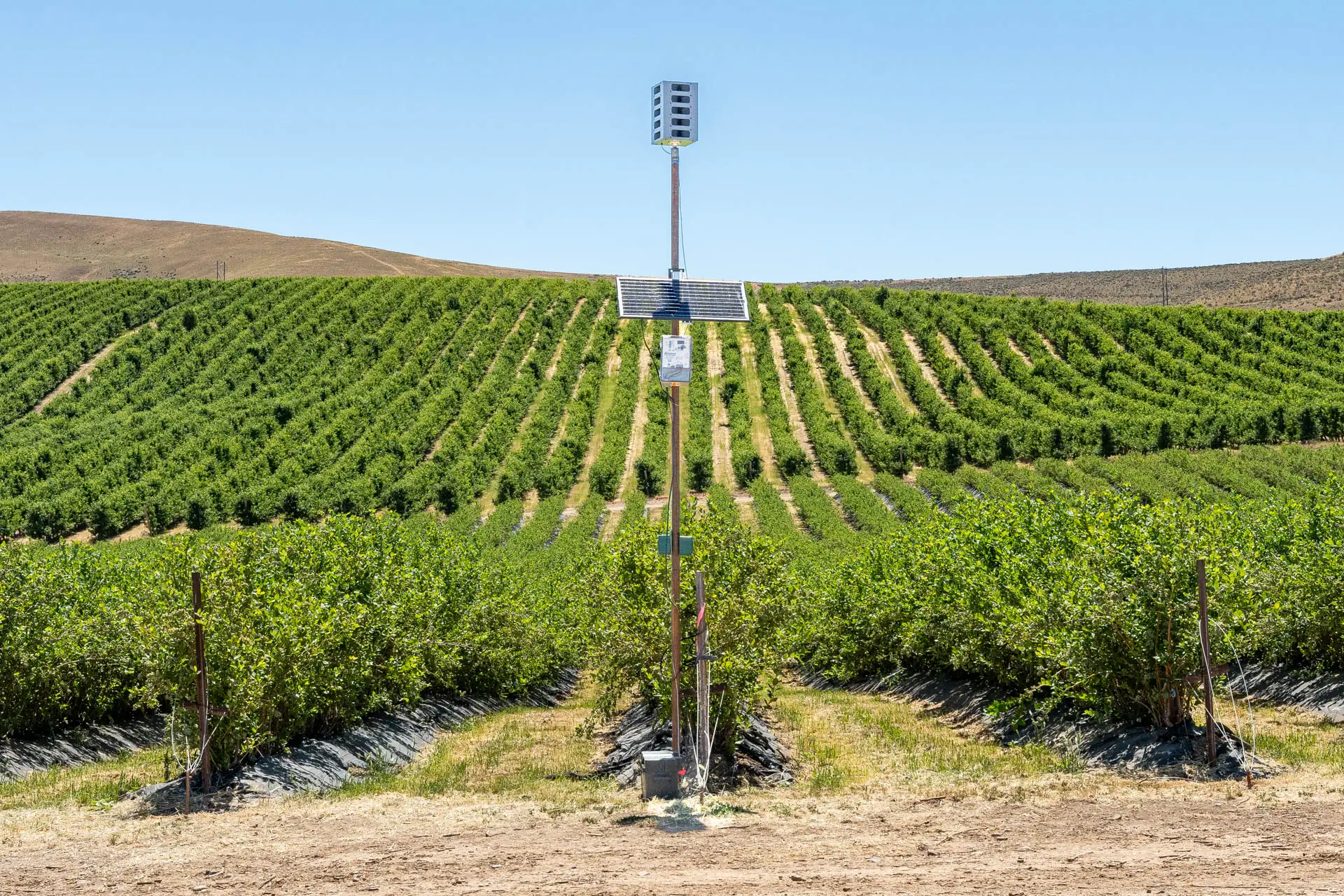
“Bioacoustic” means the system uses real sounds from nature — species-specific distress calls and predator vocalizations — rather than synthetic beeps or a single recorded screech. The most effective systems combine three things the research points to: realistic, varied sounds drawn from many species, so the audio matches threats birds instinctively recognize; randomized playback, so there’s no repeating pattern for birds to learn; and built-in quiet intervals, so the sound never becomes constant background noise.
Bird Gard’s systems are built on exactly this principle. They draw on more than 250 bioacoustic sounds from nature, played in unpredictable combinations with strategic time-off intervals, so the deterrent stays believable season after season instead of fading into background noise. You can see how this works on our How It Works page. This is the practical answer to the habituation problem the studies describe.
The field evidence: what growers and researchers report
Independent trials and long-term customers report substantial reductions in bird damage. The following are testimonials reported on Bird Gard’s site, attributed to the people who ran the trials. A horticulturist at Auburn University reported that bird-damaged peaches dropped from 10–20% per harvest to 2–3% after installing Bird Gard (Monte L. Nesbitt, Auburn University). An IPM wildlife specialist at Cornell University reported that a sweet-cherry block which “typically suffered 40%–50% crop loss each season” produced the largest crop the orchard manager could remember during the Bird Gard trial (Dr. Paul Curtis, Cornell University). A researcher at Michigan State University’s research center reported “significantly lower bird pressure” on Merlot and Cabernet Franc wine grapes (Thomas Zabadal). You can read more in our testimonials and success stories.
These are field reports rather than controlled laboratory results, and outcomes vary by site, crop, bird species, and how the system is deployed. But they’re consistent with the research: unpredictable, lifelike sound reduces bird pressure where simple noise-makers don’t.
How sonic deterrents compare to other methods
Sound isn’t the only way to reduce bird damage, and the right choice depends on the site. Netting physically excludes birds but is labor-intensive and expensive to install and repair over large acreage. Lasers can work but lose effectiveness when leaves and branches block the beam, and results vary by species. Propane cannons are loud and predictable — birds habituate, and the noise frequently creates conflict with neighbors. Visual scares like reflective tape and scarecrows tend to work early, then fade as birds adapt.
A well-designed bioacoustic system has a different profile: it penetrates foliage where light can’t, covers wide areas per unit, and — critically — is engineered specifically to resist the habituation that undermines most other sound-based tools.
The bottom line
Do sonic bird deterrents work? The cheap, repetitive kind usually don’t — and that’s exactly why so many people doubt the whole category. But the research is consistent: when a deterrent uses realistic, varied bioacoustic sound on an unpredictable schedule, it meaningfully reduces bird damage. That’s the design Bird Gard has refined over 35+ years of protecting crops, vineyards, and commercial sites.
If you want help figuring out whether a bioacoustic system is the right fit for your birds, your crop, and your acreage, talk to a Bird Gard advisor — there’s no cost to ask. Ask a Bird Control Advisor, or call 541.549.0205.